Suffolk & Nassau County, Long Island
Land Clearing in Suffolk & Nassau County
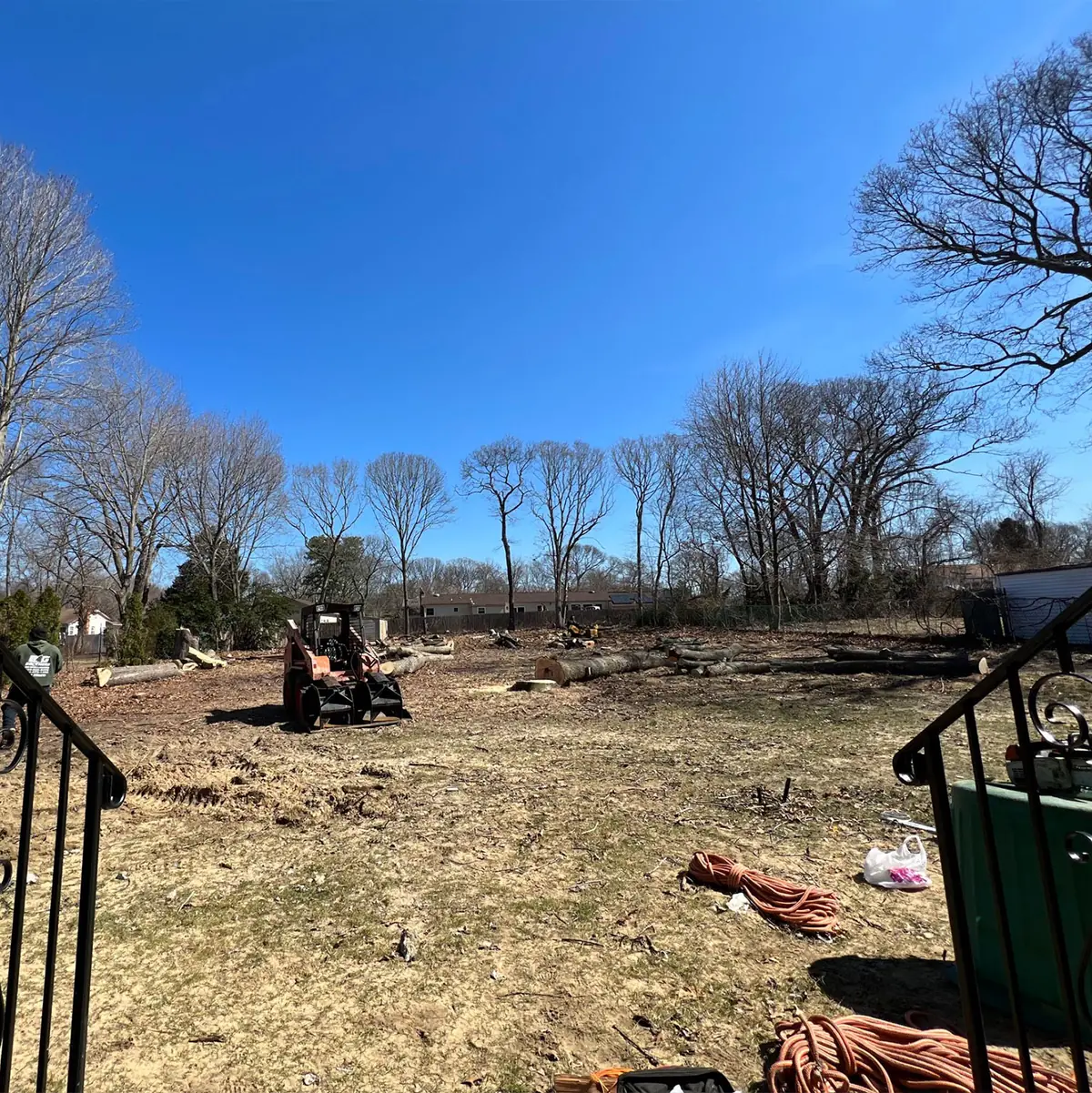
Whether you're prepping a lot for new construction, opening up space for a pool or addition, or getting a septic system and driveway put in, the ground needs to be clear before anyone else can start work. Big Brothers Tree Service handles land clearing across Lindenhurst, Babylon, Farmingdale, Deer Park, and the rest of Suffolk and Nassau County — from small backyard clearing for a single project to full lot clearing ahead of new home construction.
Call (631) 873-1596We work directly with homeowners, builders, and excavators to clear on schedule so the next trade isn't waiting on us. Every job starts with a walk of the property and a free estimate — call (631) 873-1596 to set one up.
What We Clear Lots For
Most of our land clearing work falls into a few categories: full lot clearing ahead of new home construction, clearing a defined footprint for a home addition, opening up a backyard for an inground pool, and clearing the path for a new driveway or septic system installation. Each of these has different requirements — a septic clearing job might only need a specific 20x30 area opened up plus equipment access, while new construction usually means clearing the entire buildable envelope on the lot.
We also get called for simpler jobs: overgrown lots that have sat vacant for years, wooded back corners of a property the owner wants opened up for a lawn or garden, or storm-damaged sections where downed trees and broken limbs have turned into an impassable mess.
Selective Clearing vs. Full Clearing
Selective clearing means removing specific trees, brush, and vegetation while leaving other trees standing — common when you want to keep some mature shade trees for privacy or value while opening up a defined work area. This takes more care and typically more time since we're navigating around trees we're preserving, protecting their root zones and trunks from equipment damage.
Full clearing removes everything down to bare or graded ground across the entire footprint, which is standard for new construction lots where the builder needs a clean slate for grading, foundation work, and utility trenching. We'll talk through which approach fits your project and mark out boundaries on site before any cutting starts, so there's no confusion about what stays and what goes.
Brush, Vines, and Invasive Growth
Long Island lots that have sat undisturbed for a few years often aren't just overgrown with saplings — they're tangled with invasive vines and brush that make manual clearing miserable. Oriental bittersweet and greenbrier wrap around trunks and each other into thick mats that need to be cut and pulled out by the roots or they'll come right back. Poison ivy is extremely common in untouched lots and we take precautions handling it so it doesn't end up spreading to the rest of the property or affecting our crew.
On lots near wetter edges — drainage ditches, pond borders, or low spots that stay damp — we sometimes run into phragmites, the tall invasive reed grass that spreads aggressively and needs to be cut back and monitored, since a single clearing pass alone won't eliminate an established stand.
Grinding vs. Hauling Debris
Cleared brush, trees, and stumps have to go somewhere, and we give clients options depending on budget and what's planned for the site. Grinding brush and smaller material on-site into mulch is often the cheaper route and the mulch can be spread on the property or used to control erosion on bare soil until construction starts. Larger trunks and material that won't grind down easily gets hauled off site.
For construction lots, we coordinate directly with the excavator or general contractor on debris handling and timing — sometimes it makes sense to grind everything into a pile the excavator can spread during rough grading, other times a full off-haul is what the site plan requires. We'll ask about the construction schedule during the estimate so our clearing lines up with what's coming next.
Coordinating with Excavators and Grading
Land clearing is almost always the first step in a longer construction sequence, and timing matters. We stay in contact with excavators and site contractors to make sure clearing wraps up before grading equipment is scheduled to arrive, and we flag anything we find during clearing — old foundations, unexpected drainage, dense root mats — that could affect the excavator's plan. On larger residential and small commercial projects we're happy to join a pre-construction walk with the builder to confirm scope before pricing the job.
Permits and Sensitive Areas in Suffolk & Nassau
Both Suffolk and Nassau County townships regulate land clearing to some degree, and requirements vary by municipality — some towns require a clearing permit for lots over a certain size or for removal of a certain number of trees, while others focus permitting on tree removal specifically rather than brush clearing. Because these rules differ from one township to the next and change from time to time, we always recommend confirming permit requirements with your local building department before clearing begins, and we're glad to point you toward the right office based on your address.
Properties near wetlands, ponds, or within the broader Pine Barrens region of Suffolk County can carry additional environmental review, since these areas are protected under state and county conservation programs. If your lot backs up to a wetland buffer or falls within a Pine Barrens zone, plan on extra lead time for approvals and let us know early — we can adjust our clearing plan to respect buffer setbacks once you have guidance from the town or the Pine Barrens Commission.
Timelines and Equipment Access
A small backyard clearing job for a pool or addition might take a single day with a two or three-person crew. Full lot clearing ahead of new construction on a typical quarter-acre to half-acre Long Island lot generally runs a few days to a week depending on tree density, debris volume, and whether we're grinding material on-site or hauling it away. Larger or heavily wooded lots take longer.
Equipment access is worth thinking about early — we need a path wide enough for chippers, mini skid steers, and in some cases a small excavator to get to the work area. If the only access is a narrow side yard or shared driveway, let us know when you request your estimate so we can plan the right equipment and sequence the job to avoid blocking neighbors or existing structures.
Frequently Asked Questions
Do I need a permit to clear my lot in Suffolk or Nassau County?
It depends on your township and the scope of the work — some towns require permits for larger clearing jobs or significant tree removal. We recommend confirming with your local building department before we begin, and we can help point you to the right office.
How long does land clearing take for a new construction lot?
A typical quarter to half-acre residential lot usually takes a few days to about a week, depending on how densely wooded it is and whether debris is ground on-site or hauled away. We'll give you a firm timeline during the estimate.
Can you clear around trees I want to keep?
Yes, that's selective clearing. We mark boundaries with you on site before starting and take extra care around root zones and trunks of preserved trees so they aren't damaged by equipment.
What happens to the trees and brush you clear?
We can grind smaller material into mulch on-site, which is often the more affordable option, or haul debris off the property entirely. For construction lots we'll coordinate with your excavator on whichever makes sense for the grading plan.
Is my lot near a wetland or the Pine Barrens going to be a problem?
It may require additional review before clearing. Properties near wetlands or within Pine Barrens zones in Suffolk County can be subject to extra environmental oversight, so we recommend checking with the town or the Pine Barrens Commission early in your planning.
Can you handle poison ivy, bittersweet, and other invasive growth?
Yes, we deal with these regularly on overgrown Long Island lots. Vines like bittersweet and greenbrier need to be pulled out at the root or they'll return, and we take precautions with poison ivy to protect our crew and the rest of the property.
Will you work with my excavator or general contractor?
Absolutely — we coordinate scheduling and debris handling directly with excavators and builders regularly so clearing wraps up on time and lines up with your grading and construction schedule.