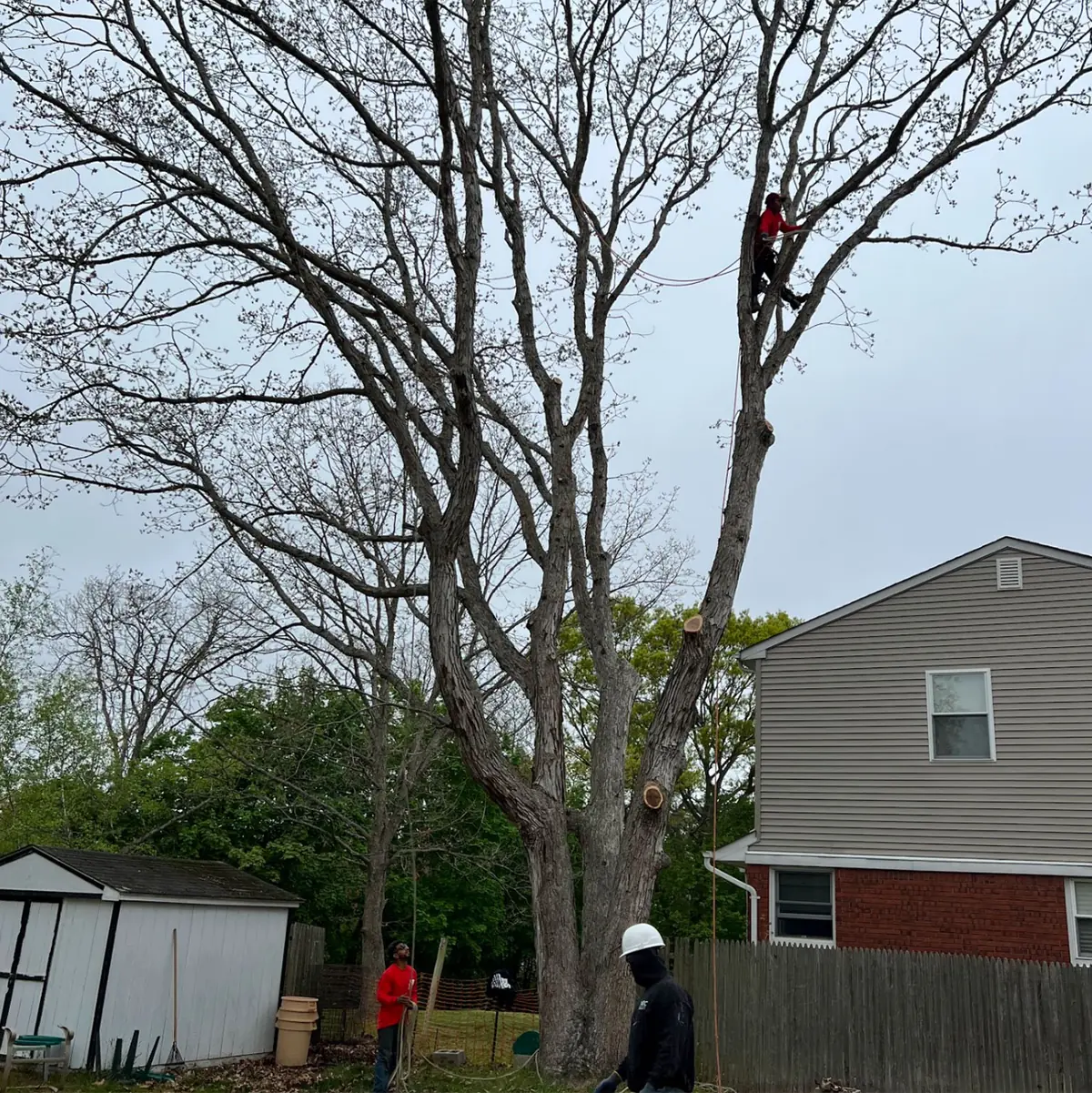
Long Island Tree Care Blog
Does Homeowners Insurance Cover Tree Removal in New York?
New York homeowners insurance may cover necessary tree removal when a covered event causes a tree to damage an insured structure, subject to policy terms, exclusions, deductibles, and limits. Yard-only cleanup and preventive removal of standing trees are generally different situations; ask your carrier to review your actual policy before authorizing work on the assumption it will reimburse you.
Call (631) 873-1596By Big Brothers Tree Service · Published · Last updated
What are the key takeaways?
- Damage to an insured structure and debris removal are related but distinct coverage questions.
- A tree in an open yard or a standing hazardous tree may not qualify for coverage.
- Driveway-access exceptions, wind deductibles, and removal limits depend on the policy.
- A damaged vehicle may involve auto comprehensive coverage rather than homeowners insurance.
- Prioritize safety, photographs, carrier notice, and documented authorized mitigation.
When might removing a fallen tree be covered?
A tree across a roof creates two immediate problems: damage to the building and the work needed to reach it safely. If the event and damaged property qualify under your homeowners policy, necessary lifting or cutting to access covered repairs may be considered as part of the claim. That does not mean every associated cleanup expense receives the same treatment.
Ask the adjuster to distinguish removing the tree from the structure, repairing the structure, and disposing of debris afterward. A detached garage, shed, deck, or fence may fall within different policy provisions, with different exclusions or limits. Describing something as a structure does not establish that your particular policy insures it.
What does New York DFS guidance actually establish?
The New York Department of Financial Services explains that homeowners policy forms can differ and that the declarations page summarizes coverage types, limits, deductibles, and endorsements. Its guidance supports reading the full policy rather than treating a general online answer as a promise of payment. See.
DFS also notes that windstorm or hurricane deductibles may apply to policies in certain areas. For a Suffolk County property, ask which deductible applies to this event and why; do not assume the ordinary deductible controls. The relevant wording and event facts need carrier review. See.
What if the tree fell only in the yard?
A tree lying across open lawn without damaging insured property often presents a cleanup expense rather than a covered building loss. A dramatic fall, a large trunk, or a costly crane requirement does not by itself establish coverage. Landscaping coverage, if present, can have its own covered causes and limitations and should not be confused with general debris removal.
Consider a hypothetical Smithtown yard where wind drops a tree onto grass, away from buildings and access routes. The owner should ask whether any debris-removal or landscaping provision applies, but should budget for the possibility of paying personally. This is an illustration, not a customer story or a prediction about a claim.
Can a blocked driveway change the answer?
Some policies contain limited exceptions for fallen trees blocking a driveway or specified accessibility access, even without structural damage. The exact obstruction, route, cause of loss, and policy language matter. A branch beside a driveway is not necessarily treated like a tree preventing a vehicle from entering or leaving.
Photograph the entire access route from a safe position and explain whether an alternative entrance exists. Ask the carrier to identify any applicable provision in writing. A hypothetical Huntington homeowner whose only driveway is blocked may receive a different coverage decision from someone with a tree beside an unused parking pad; neither outcome should be assumed in advance.
Does insurance pay to remove a standing hazardous tree?
Preventive removal of a standing tree is generally maintenance rather than a covered sudden loss. A tree leaning toward a house, showing decay, or losing limbs deserves prompt professional assessment, but urgency alone does not create insurance coverage. Ask the carrier whether any unusual policy provision applies instead of relying on a contractor to interpret the contract.
If a storm partially breaks a tree and leaves it suspended, describe those facts precisely. Stabilization of an active hazard, removal from a damaged structure, and elective removal of another standing tree are separate tasks. Obtain an itemized scope so an adjuster can review each without confusing safety work with routine prevention.
How do deductibles and removal limits affect payment?
Even an accepted claim may leave the homeowner with substantial out-of-pocket costs. The applicable deductible, exclusions, debris-removal sublimits, and available coverage can affect reimbursement. Ask whether removal from the damaged structure is evaluated differently from cutting up and hauling the remaining tree, and whether any limit applies per tree or per occurrence.
Stump grinding, root-ball excavation, lawn restoration, and replacing landscaping should be identified separately rather than bundled into an assumed covered removal. Request an estimate showing equipment, labor, emergency stabilization, hauling, and optional finishing work. A contractor’s total is not the carrier’s coverage decision, and an adjuster’s initial discussion is not necessarily final approval.
What if the tree hit a car or came from next door?
A car is not an insured home structure merely because it was parked in the driveway. DFS explains that auto comprehensive coverage normally addresses falling objects such as windblown trees, subject to the auto policy and deductible. Contact your auto insurer to confirm your coverage; a homeowners claim should not be assumed to cover vehicle damage. See.
Likewise, a tree originating next door does not automatically make the neighbor liable. Your own property insurer may evaluate covered damage while responsibility is investigated separately. Evidence of condition and notice can matter, but negligence and recovery questions require case-specific insurer or legal review. Do not delay urgent safety measures while arguing over fault.
What should you do before cleanup starts?
Keep everyone away from hanging limbs, tensioned trunks, unstable roofs, and utility lines. Call emergency services for immediate danger and the utility for suspected electrical involvement. Do not enter a damaged building or climb onto a roof for photographs. Safe documentation is valuable; it is never worth another injury.
Notify the carrier promptly and request instructions about inspection, emergency authorization, and preserving evidence. DFS recommends documenting losses and keeping repair records as part of managing a claim. Coordinate reasonable mitigation without allowing avoidable further damage, while recognizing that emergency work is not automatically reimbursable. See.
- Take wide scene photos and close-ups from safe locations before work, when possible.
- Record the date, visible damage, contractor contacts, and carrier instructions.
- Authorize a defined emergency scope and retain estimates, invoices, and receipts.
- Ask before disposing of evidence the adjuster may need; document unavoidable changes.
How can you plan removal without assuming coverage?
Use the emergency tree removal page for urgent service information, the Long Island removal page for general scope, and the cost guide to understand access and equipment factors. The existing cost guide is an overview, not a coverage determination: in particular, its grouping of cars with structures should not be read as homeowners coverage for automobiles.
For local planning, the Smithtown service page provides a relevant town destination. Give the contractor factual information about access, hazards, and requested work, then let your carrier address insurance. This article is educational, not legal or coverage advice; consult your policy, carrier, and a New York lawyer when responsibility or disputed coverage requires individual analysis.
- 30+ Years Experience
- Licensed
- Insured (Liability + Workers' Comp)
- Our Own Bucket Trucks & Cranes
- BBB A+ Accredited
- 24/7 Emergency
Recent jobs
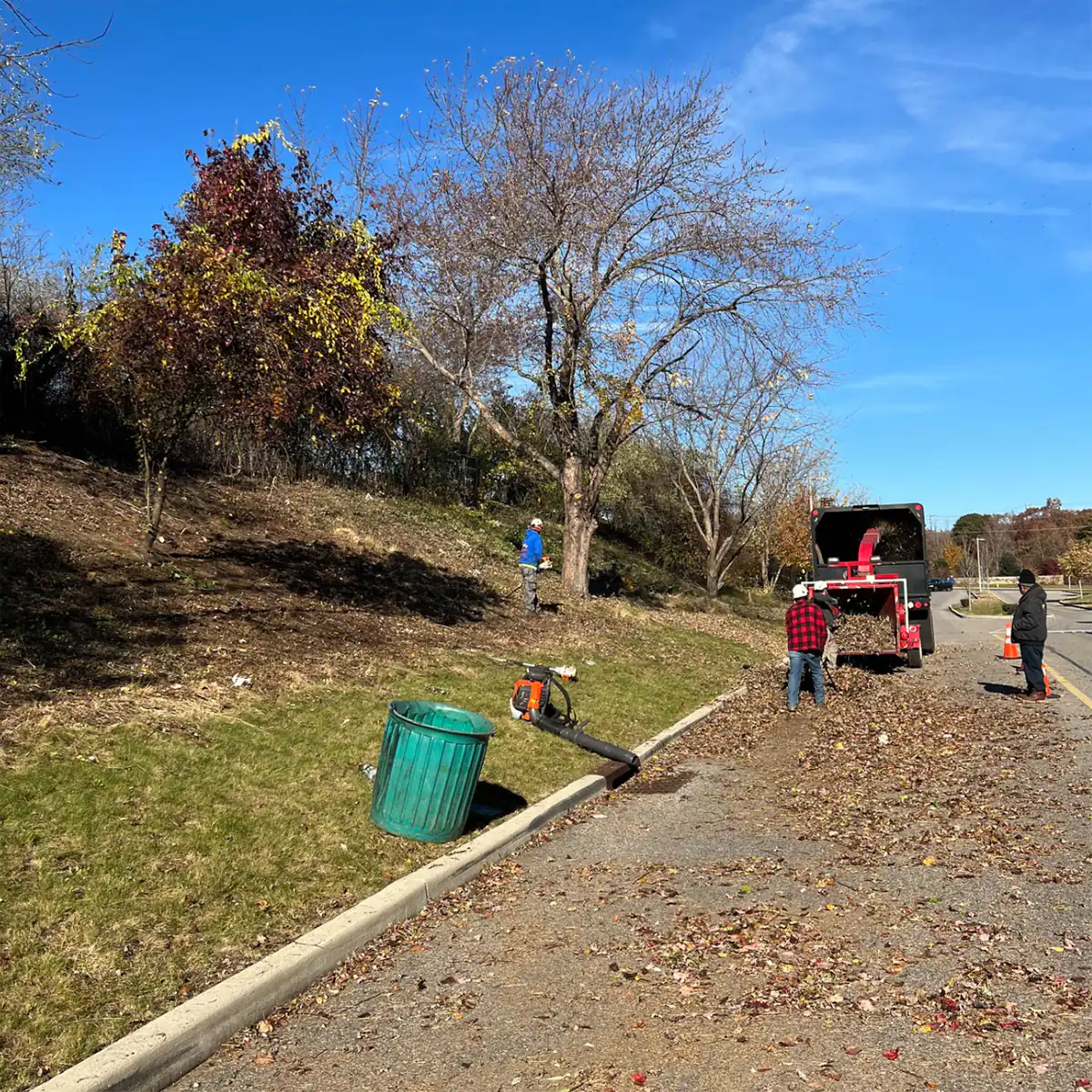
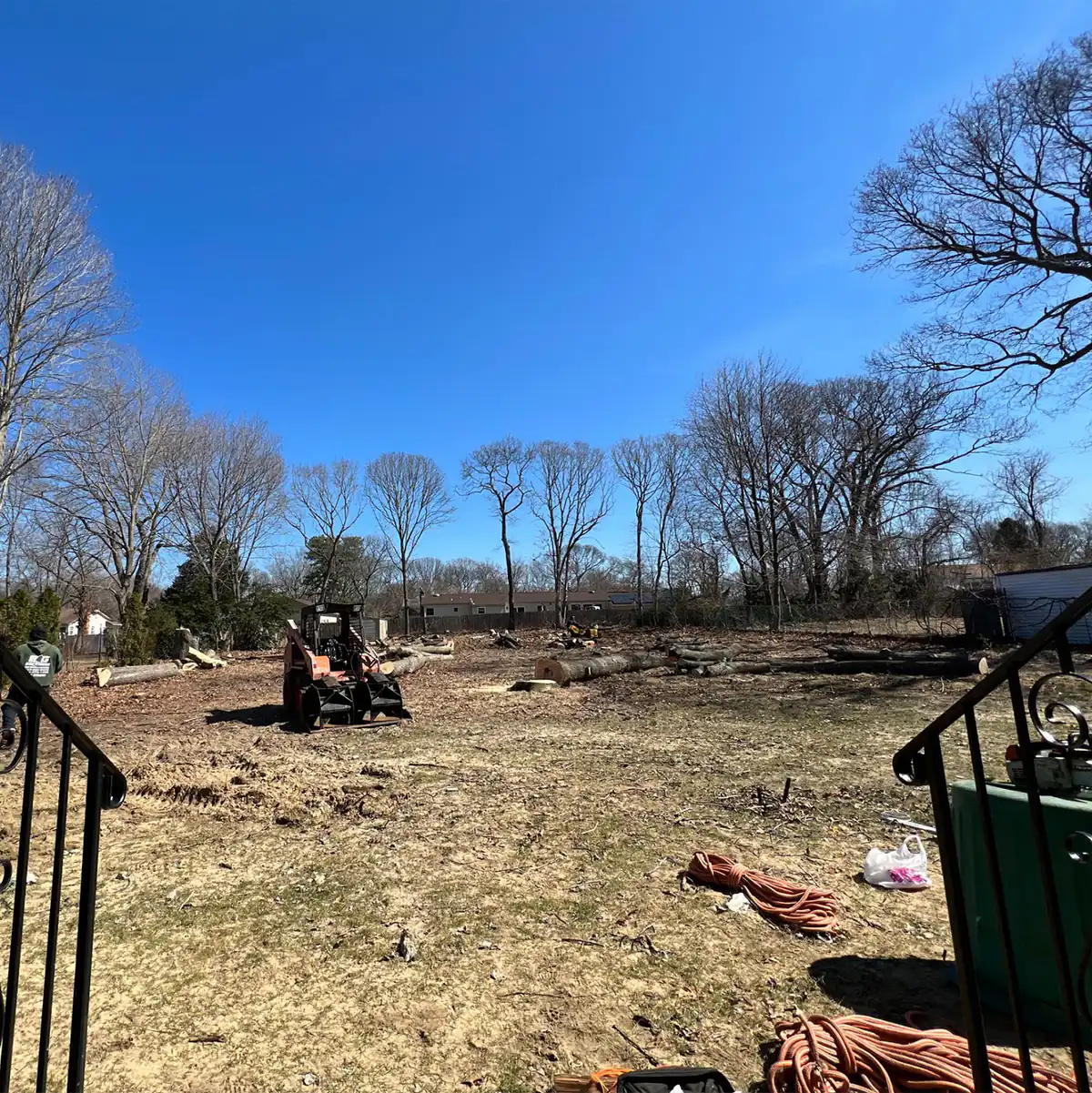
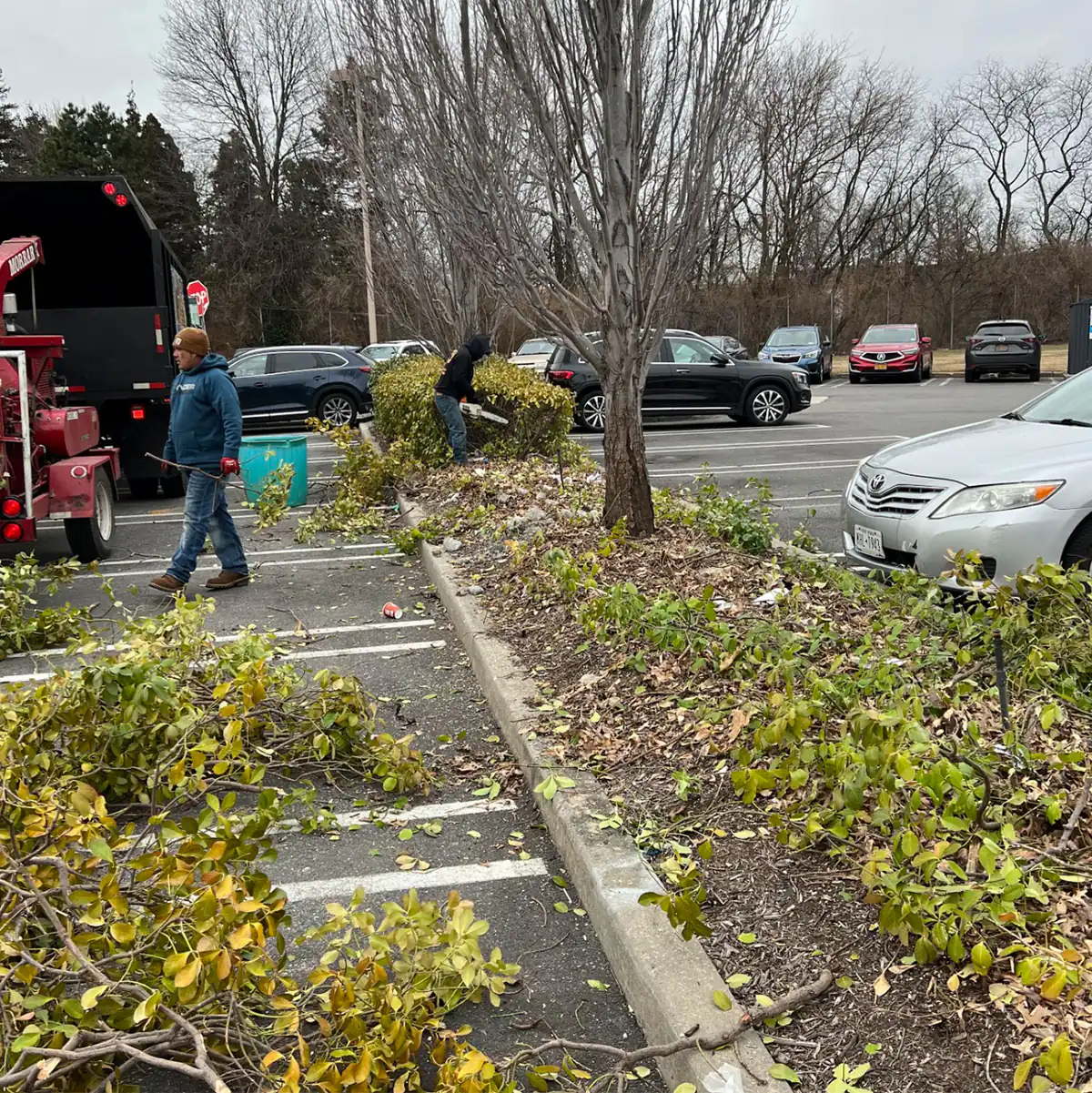
What else do Long Island homeowners ask?
Is every storm-related fallen tree covered?
No. Coverage depends on the event, damaged property, applicable provisions, and exclusions. Ask your carrier to review the facts and identify the controlling policy language.
Can I hire a crew before the adjuster arrives?
Urgent mitigation may be necessary, but seek carrier instructions and authorization when feasible. Document the hazard and scope safely, keep receipts, and do not assume emergency work guarantees reimbursement.
Will insurance pay for stump grinding?
Not necessarily. Treat grinding, root removal, and landscape restoration as separate estimate items and ask whether your policy covers each.
Does an open-yard fall qualify if removal is difficult?
Difficulty alone does not establish coverage. Ask about any specific debris or access exception, and be prepared for a yard-only cleanup to be an owner expense.
What should I request if coverage is denied?
Request the decision and policy-based explanation in writing. Review it with your agent or carrier; consult DFS consumer resources or a lawyer if questions remain.
Will homeowners insurance cover preventative tree removal?
Usually not. Most homeowner's policies treat removing a standing tree before it falls as maintenance, which is the owner's expense, even when the tree is dead or leaning. Rules vary by policy, so check with your carrier, and keep any arborist assessment in case a later claim arises.
Will State Farm pay for tree removal?
It depends on your specific State Farm policy and on what caused the tree to fall and what it damaged. Like other carriers, coverage terms vary by policy, so the only reliable answer comes from your own policy documents, your agent, or the carrier's claims line.
Does insurance cover a tree struck by lightning?
Lightning is commonly a covered cause of loss, so damage a lightning-struck tree causes to a covered structure may be covered, often including removal from that structure. A standing tree that was struck but did not damage anything may not be covered. Policies vary, so check with your carrier and photograph the tree and any damage.
Does home insurance cover tree root damage?
Often not. Gradual damage from roots, such as cracked foundations, lifted walkways or roots in sewer lines, is frequently treated as wear, maintenance or excluded settling rather than a sudden covered loss. Policy wording varies, so check with your carrier before assuming either way.
Does homeowners insurance cover tree trimming?
Generally no. Routine trimming and pruning are considered maintenance and are the homeowner's cost. Coverage questions usually only come up after a tree or limb has fallen and damaged covered property, and those depend on the policy.
Does a home warranty cover tree removal?
Typically not. Home warranties are service contracts that usually cover home systems and appliances, not trees or landscaping. Contract terms vary, so read your own warranty, and look to your homeowner's insurance policy for storm damage questions instead.
Where can you find related local services?
Where can you check the source guidance?
Need help with a tree on Long Island?
Call for a free estimate. Emergency tree service is available 24/7. For immediate danger or downed wires, stay clear and call 911 or the utility first.
Call (631) 873-1596