Suffolk County · Town of Brookhaven
Tree Removal in Yaphank, NY
Tree removal in Yaphank often involves more than finding an open direction for a trunk to fall. Older trees may stand beside houses, detached garages, wooded property edges, or narrow driveways where equipment access needs careful review. Around Main Street and the Carmans River corridor, the setting makes it especially important to assess the individual tree, surrounding vegetation, and nearby features before choosing a removal method.
Call (631) 873-1596Yaphank is in the Town of Brookhaven, Suffolk County, but a mailing address alone does not establish which environmental restrictions affect a property. A useful assessment connects the reason for removal with the actual parcel conditions: visible decline, storm damage, root disturbance, limited clearance, or conflict with a structure. That information helps shape a practical scope without assuming that every large tree is dangerous or every wooded lot has the same requirements.
Big Tree Removal in Yaphank
Hazardous mature trees deserve a close look at their structure and surroundings. Dead upper limbs, trunk cavities, splitting unions, fungal growth, or a newly shifting root plate can justify further evaluation, but no single feature tells the whole story. The assessment should consider where a failure could land, whether people regularly occupy that area, and whether pruning or another approach could address the concern.
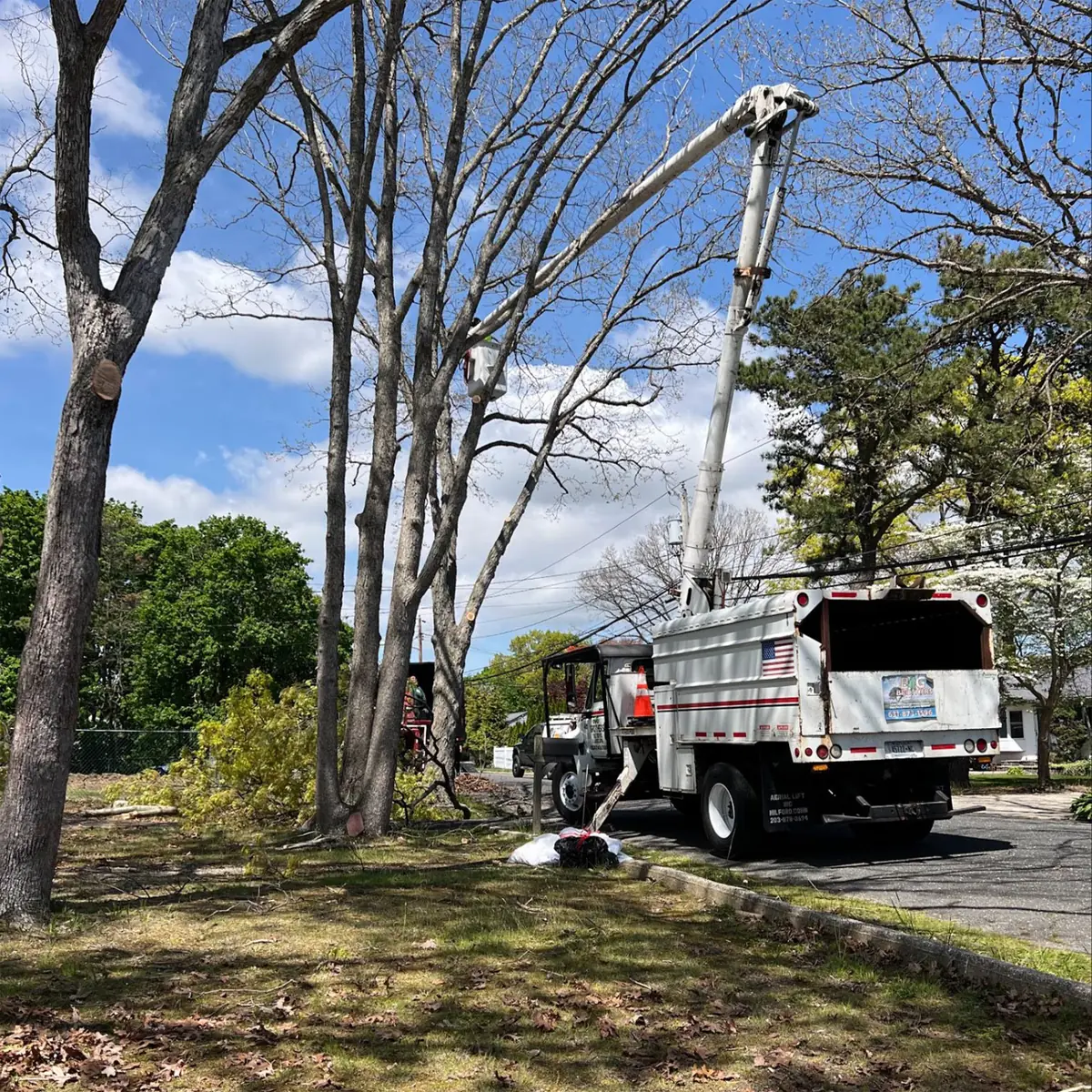
For a large tree near a home, the removal plan may involve sectional dismantling rather than dropping the whole tree. A crane, bucket truck, climbing system, or rope rigging may be considered after reviewing reach, access, ground support, and tree condition. None should be promised before inspection. Equipment positioning must also account for driveways, septic components, buried services, and space for handling branches and trunk sections.
Parcel checks near woodlands and the river
Before scheduling work, confirm applicable Town of Brookhaven requirements and whether the parcel falls within an area subject to Central Pine Barrens review or other environmental controls. Proximity to the Carmans River is a reason to investigate relevant wetland or waterway protections, not proof that a particular restriction applies. Parcel location, proposed work, and current agency guidance matter more than a general neighborhood description.
Keep the proposed removal clearly identified, especially where a wooded boundary includes trees belonging to different owners. Confirm ownership and any access permission before crews enter an adjoining lot. A written scope should distinguish the tree being removed from vegetation being retained and explain how equipment movement and cleanup will be handled around the remaining landscape.
Protecting roofs, access, and utility corridors
On properties reached from Mill Road or other established local roads, driveway width and turning space can affect the approach. Branches above roofs may need controlled lowering, with landing areas chosen to avoid gutters, fences, and parked vehicles. Discuss whether logs leave the property, whether brush is chipped, and whether stump work is included rather than treating those tasks as automatic.
Power lines require a separate safety decision. Do not approach a hanging branch or assume a service wire is safe to touch. Where a tree contacts lines or could interfere with electrical equipment, contact the serving utility for direction and appropriate coordination. Ordinary tree work should not proceed as though utility clearance were simply another rigging detail.
Trees We Work On in Yaphank
Pitch pine
A characteristic Long Island pine, pitch pine should be assessed for crown condition, broken limbs, and site disturbance rather than removed solely because it leans.
White oak
Mature white oaks can occupy substantial space. Inspection should consider major unions, cavities, and root conditions alongside the consequences of removing an established canopy tree.
Red maple
Red maple may occur in wetter settings. Assess individual stems and nearby targets, and check relevant site protections before planning removal near low ground or drainage features.
Where We Work in Yaphank
- Main Street
- Mill Road
- Carmans River
Yaphank Tree Service FAQs
Do I need a permit to remove a tree in Yaphank?
Confirm current requirements with the Town of Brookhaven using the property address and proposed work. Also verify whether Pine Barrens, wetland, or other parcel-specific review applies. Do not assume that a dead tree or residential setting automatically eliminates approval requirements.
What affects the cost of tree removal in Yaphank?
Cost depends on tree condition, access, removal method, nearby obstacles, debris handling, and the agreed scope. Stump grinding and restoration may be separate. A site-based written estimate is more useful than a generic figure; the Long Island tree removal cost guide provides additional context.
Long Island tree removal cost guideWhat should I do after emergency tree damage in Yaphank?
Keep people away from the tree and any damaged structure. Call emergency services for immediate threats to life, and notify the utility about involved wires. Arrange an assessment from a safe location rather than attempting to cut a suspended limb yourself.
Can a Yaphank tree beside my roof or wires be removed?
Possibly, but the method depends on inspection, safe access, and necessary coordination. Roof clearance may require controlled dismantling. Electrical exposure requires utility referral and appropriately qualified personnel; crane or bucket access cannot be guaranteed from photographs.